Skip to content

No payment to inquire, Written quote first, QC before final balance

Vietnam bridal atelier · Ho Chi Minh City

Custom draped wedding dresses made to your measurements, reviewed by Vi before a written quote.

A draped gown uses soft folds, cowl necks, or gathered fabric to create movement and shape — no rigid structure, no heavy boning. How a drape falls depends on the fabric, your body shape, and how the dress is cut. Vi reviews the reference, fabric direction, and drape construction before confirming what can be made. Send your references, wedding date, delivery country, and fit concerns before a written quote or payment.

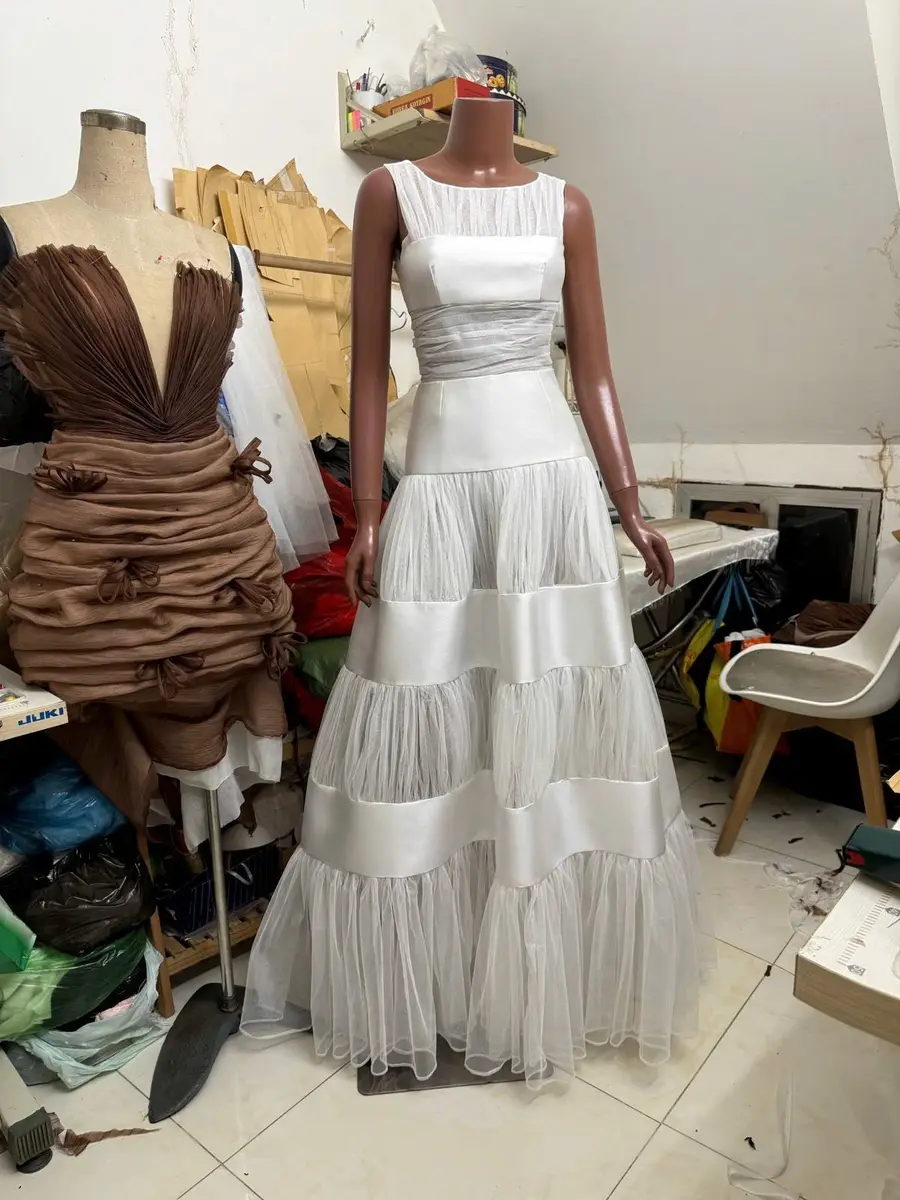
Finished custom Mikado silk and tulle draped wedding dress by VI Dressmakers before USA shipping
Krystal's Mikado silk and tulle draped gown, reviewed by video before USA shipping.

draped construction

What makes draping different from other silhouettes

Draping is not a fixed silhouette — it is a construction approach. A draped cowl neckline, a one-shoulder gathered bodice, a cascading overskirt fold, and a bias-cut hip drape are all "draping." What they share is that the fabric is shaped by how it is cut, gathered, or folded — not by boning or heavy structure.

This makes draping beautiful and difficult in equal measure. The final look depends heavily on the fabric. A drape that reads fluid in silk charmeuse will look stiff in mikado. Vi reviews fabric direction carefully for every draped design.

Before a quote

What Vi reviews before quoting a draped dress

Vi reviews the construction, measurements, movement, and remote fit risk before payment is discussed.

Read the pricing guide

Fabric choice and drape behaviour

Each fabric drapes differently. Soft crepe and charmeuse move and fall. Mikado holds shape. Satin reflects light and shows every fold. Vi confirms the fabric from your references before production — and will flag if your reference fabric is unlikely to match what you expect.
Drape construction type

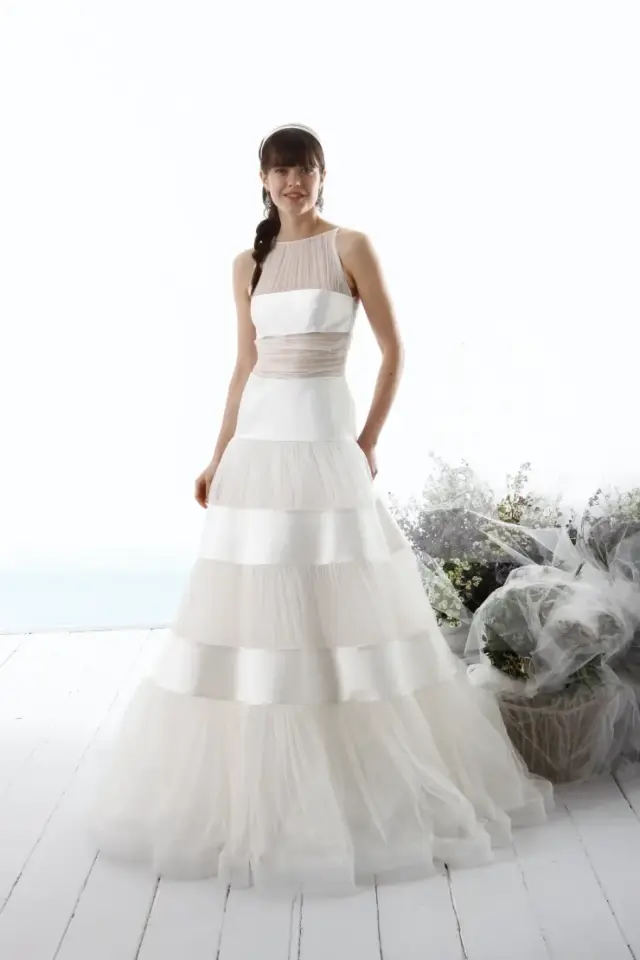
Cowl neck, gathered bodice, asymmetric fold, bias hip, cascading skirt — each is constructed differently. Vi reviews how your reference drape is built before confirming the direction.

Body shape and drape placement

Where a drape sits affects how it reads on different bodies. A cowl neck at the front reads differently on a smaller bust versus a larger bust. Vi reviews drape placement in relation to your measurements and fit concerns before production.

Movement and ceremony context

A fluid draped gown moves when you walk. Vi reviews whether your ceremony — aisle width, venue terrain, reception activities — suits the movement the drape creates.

Lining and understructure

Most draped gowns need a fitted lining underneath the outer drape layer. The lining carries the structure and prevents the outer fabric from clinging or losing shape. Vi reviews lining construction as part of the brief.

Remote fit notes

Fabric direction for draped gowns

The fabric decision matters more in a draped gown than almost any other silhouette. Vi confirms fabric direction from references before production — and can send a fabric proof for approval before cutting.

Common fabrics Vi uses for draped designs:

Mikado silk

Holds its shape in a drape and gives a structured fold with some body. Krystal's gown used Mikado for the draped bodice panels.

Crepe

Soft and fluid, drapes naturally with movement. More forgiving for bias cuts. Falls close to the body.

Charmeuse / silk satin

Very fluid and reflective. Shows every detail of how it is draped. Requires accurate construction.

Chiffon or tulle overlay

Often used as an outer drape layer over a fitted base. Adds softness and movement without changing the underlying silhouette.

Vi confirms which fabric matches your reference before quoting — and will flag if the fabric in your inspiration image is unlikely to behave the way you expect.

Remote ordering

Plan the remote order around the silhouette

Use the core process pages to plan measurements, production milestones, and final QC around the silhouette risk profile.

Questions

Common questions about custom draped wedding dresses

Can Vi replicate the draping in my reference image?

Vi reviews the drape construction from the reference before confirming. Most draped references are achievable in direction — specific fabric and body differences may change how the drape sits. Vi explains this before deposit.

Is a draped gown harder to order remotely?

It depends on the drape type. A cowl neckline or soft gathered bodice is manageable remotely. A complex bias-cut hip drape or asymmetric multi-layer fold requires more measurement precision and more production checkpoints. Vi reviews the complexity before quoting.

Does a draped gown need a lining?

Yes. Most draped gowns are built on a fitted lining that carries the structure. The outer drape layer falls over the lining. Without a lining, the outer fabric can cling, shift, or lose the drape shape during wear.

How does a draped gown ship and travel?

Draped gowns fold well for shipping because the fabric is soft. After delivery, hang the dress for 24–48 hours — most travel creases fall out. Light steaming handles the rest.

How long does a draped wedding dress take?

Most draped gowns take 8–12 atelier weeks after deposit and confirmed measurements. Bias-cut or heavily draped designs may need more. International brides should plan 3–5 months from first inquiry.

Send your draped dress brief to Vi

Share your references, wedding date, delivery country, and any questions about fabric direction or drape construction. Vi reviews the direction before a written quote or deposit.

No payment is required to start the conversation.

Chat on WhatsApp