Skip to content

No payment to inquire, Written quote first, QC before final balance

Founder guide - Lace coverage

Lace wedding dress lining and coverage.

For a lace wedding dress without a see-through look, I check more than the lace: underlining, cup area, side waist, hip, sleeve mesh, and how the dress will read in real photos.

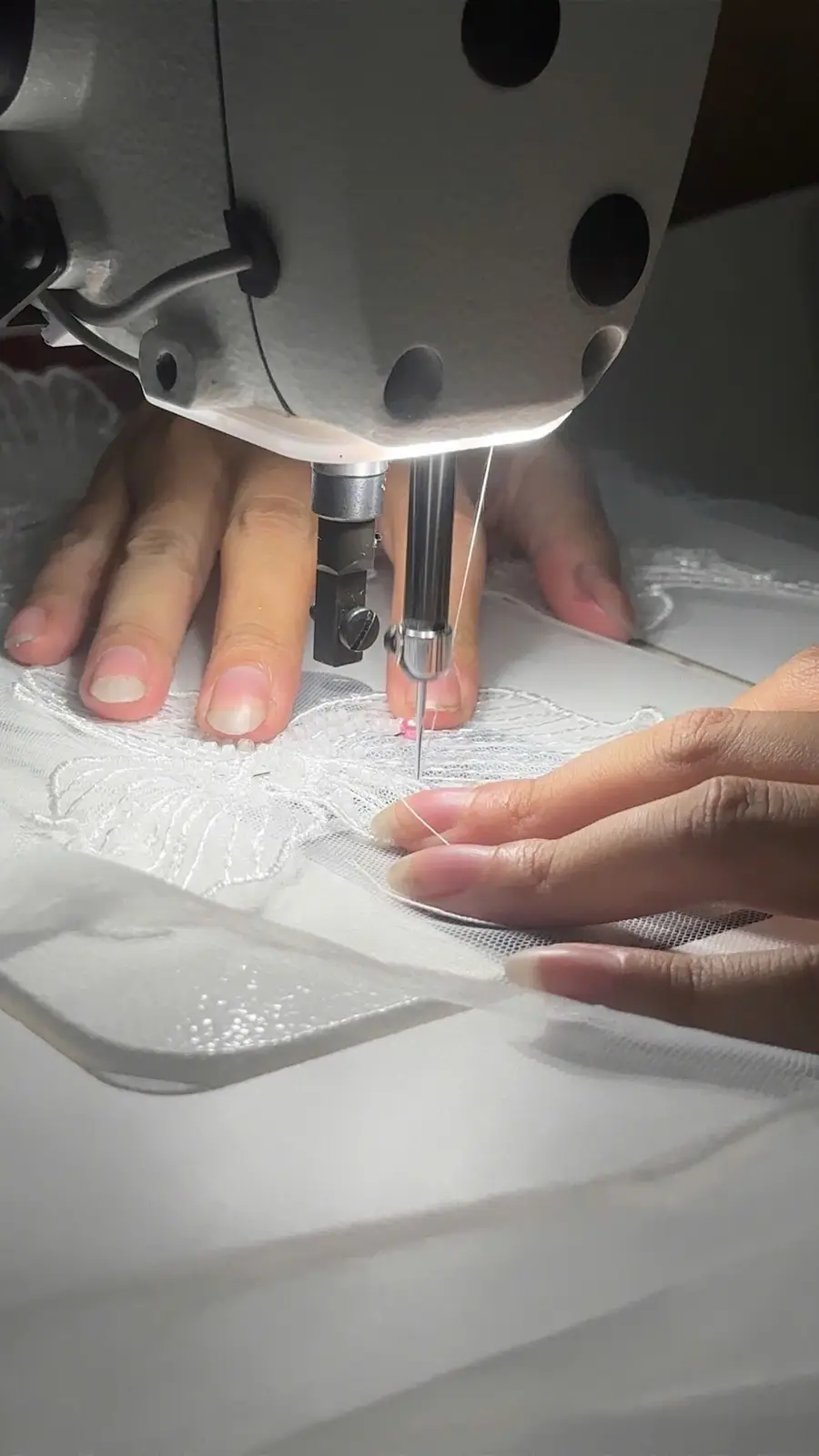
Bridal lace being sewn in the VI Dressmakers atelier before lining and coverage review

Vi's note

Written by Vi Updated

For a lace wedding dress, white lining gives the most covered bridal finish. Nude lining makes the lace motif more visible but increases transparency risk in daylight and flash photography.

A lace wedding dress is built from layers. The lace motif, mesh base, lining, cups, and skin tone underneath all change the final look. A dress can look covered on a form and still feel more transparent on a body or under brighter light.

This is why I ask about lining early. White lining can make the dress feel more bridal and covered. Nude lining can make the lace motif more visible, but it can also make the bride feel more exposed than the reference photo suggested.

For remote orders, the lining decision should be written before production and checked again in QC photos or video before packing. That is part of how I reduce surprises when the bride cannot stand in front of me for a fitting.

For lace orders, I want the lining and coverage direction clear before the dress moves too far into production.

Color choice

Which lining color should I choose for a lace wedding dress?

White lining usually makes a lace dress read cleaner and more bridal. It reduces the skin-tone show-through and keeps the bodice and skirt closer to one color family.

Ivory lining is softer and can look warmer. Nude or skin-tone lining can make the lace motif stand out more clearly, but it also increases the chance that the dress feels sheer in daylight or phone-flash photos.

The right choice is not only about taste. It depends on how much contrast the bride wants, whether the bodice has cups, how open the back is, and whether sleeves or illusion mesh are meant to stay transparent.

LiningVisual effectBest forWatch out for
WhiteBright, clean, most coveredBride wants strong bridal finish and less skin show-throughCan look stark on very warm skin tones
IvorySofter, warmer bridal toneBride wants covered but not stark whiteCan blend poorly if dress fabric is already warm
NudeLace motif most visible, less opaqueBride prioritizes lace pattern over full coverageHigher transparency risk in daylight and flash photos
MixedDifferent zones handled separatelyComplex designs with opaque bodice and sheer sleevesRequires clear written direction per zone before production
  • White

    Best when the bride wants a covered, bright bridal finish with less skin-tone show-through.

  • Ivory

    Best when the bride wants a warmer bridal tone without making the dress feel nude-lined.

  • Nude

    Best when lace contrast matters more than a fully covered white look.

  • Mixed lining

    Often needed when the bodice, skirt, sleeves, and illusion areas should not all look the same.

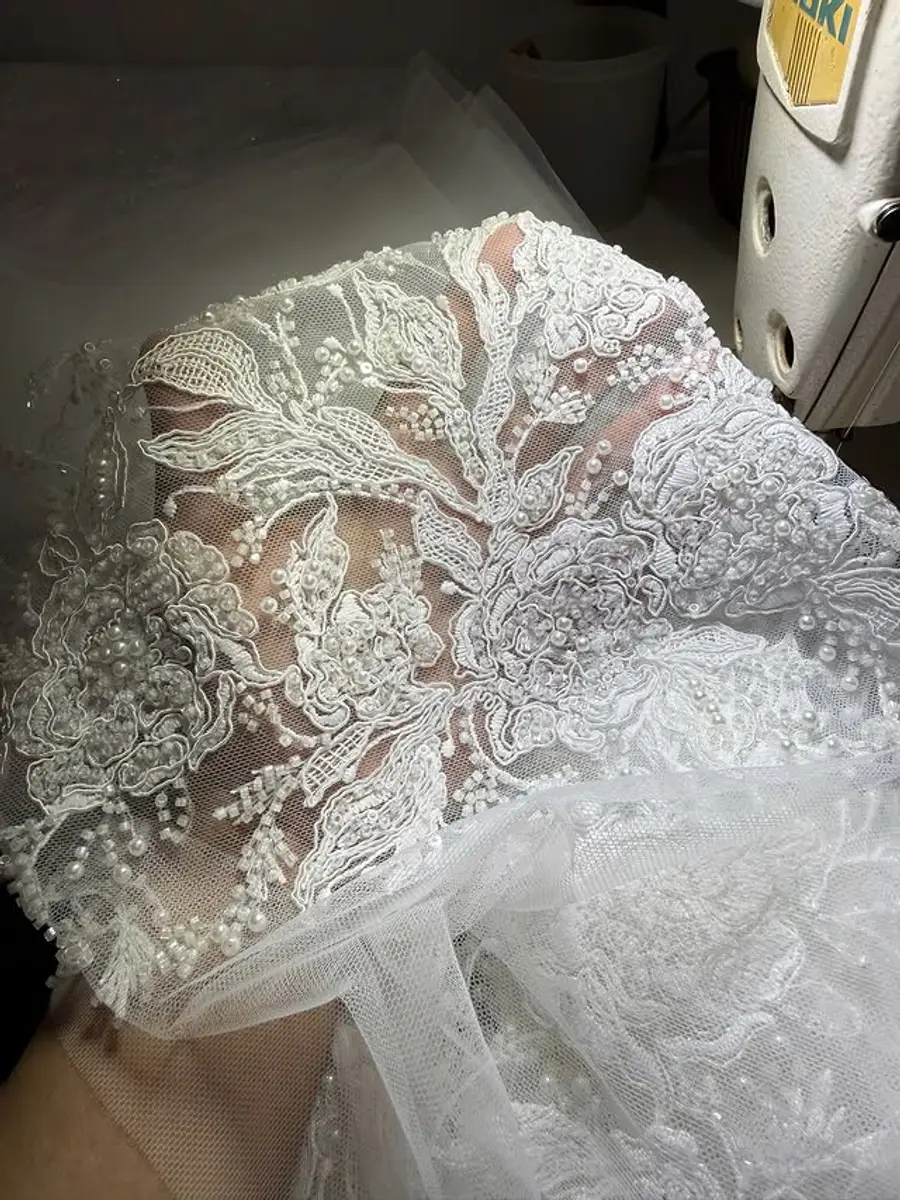
Close-up of bridal lace and pearl embroidery used to review lace surface and lining direction
Lace can look very different once it is placed over white, ivory, or nude lining.

Remote QC

How is lace coverage checked for a remote bridal order?

For international brides, final QC is not a styling moment. It is a practical checkpoint for the bodice, cups, side waist, hip, skirt lining, back view, sleeves, and train connection where relevant.

I want the proof to answer the real question: does the dress look covered enough in the areas the bride cares about? A close-up alone is not enough, and a full-length photo alone may hide transparency.

Kathleen’s Australia case is a good example. Her priority was a premium lace mermaid direction with white underlining, so we reviewed the coverage before packing and only used redacted proof for the public case.

Remote QC screenshot reviewing lining coverage for a lace mermaid wedding dress before dispatch
Public-safe QC proof can show the decision without exposing private customer details.

What to send

What should I tell my dressmaker about lace lining coverage?

The best first brief is simple: send the lace references, say whether you want white, ivory, nude, or covered lining, and tell me what you are nervous about. If the bust, waist, hip, back, or sleeves worry you, name that area directly.

Light changes every dress photo, so QC cannot promise the dress will look identical in every setting. What I can do is confirm the direction, show proof, and make the lining decision visible before dispatch.

This is also a trust point. A bride should not discover after delivery that “lace” meant something more transparent than she imagined.

  • Write the priority

    Example: "I love this lace, but I want the dress to look white and covered."

  • Show the areas

    Tell Vi if bust, waist, hip, back, sleeve, or skirt transparency is your main concern.

  • Ask for QC proof

    Final QC should include enough distance and light to review the coverage honestly.

  • Keep expectations real

    Lace sleeves and illusion mesh can stay more transparent than a fully lined bodice or skirt.

White underlining coverage adjustment proof for a lace mermaid wedding dress before packing
A coverage decision should be visible in the final proof before the dress leaves the atelier.

Guide questions

Questions brides ask about lace wedding dress lining

Does a lace wedding dress show through?

Not if the lining and coverage plan are chosen correctly. White or ivory lining under lace significantly reduces transparency at the bodice and skirt. Sheer areas such as lace sleeves, illusion mesh, or an illusion back are designed to remain more transparent regardless of lining.

What is the difference between white lining and nude lining for lace?

White lining keeps the dress looking bright and covered, so skin tone does not show through the lace as much. Nude lining lets the lace motif stand out more clearly, but it also increases transparency risk in daylight or phone-flash photos. Ivory sits between those two choices with a softer bridal tone.

Can I request QC proof of lace coverage before my dress ships?

Yes. For remote orders, final QC photos or video are shared before final balance and dispatch. Coverage review should show the bodice, cups, side waist, hip, sleeves, back, and train connection where relevant, not only a close-up.

How do I tell my dressmaker what lace coverage I want?

Name the exact areas that concern you: bust, side waist, hip, back, sleeves, or skirt. Then state your lining preference, such as white, ivory, nude, or mixed lining. A short note like "I love this lace, but I want the dress to look white and covered" is enough to guide the decision before production.

Is lace lining decided at the start or during production?

It should be decided before production starts and confirmed in the written quote. The decision is checked again during final QC before dispatch. The lining direction should never be a surprise at delivery.

Start with proof

Send the lace you love and the coverage you need.

Include your wedding date, delivery country, lace references, lining preference, and the exact areas where transparency worries you. Vi will review the direction before quote or payment, then confirm coverage again during QC.