Skip to content

No payment to inquire, Written quote first, QC before final balance

Founder guide - Fabric

Custom wedding dress fabric guide: what Vi reviews before confirming direction.

Custom wedding dresses at VI Dressmakers are quoted after the fabric direction is reviewed — not before. Fabric affects structure, silhouette, movement, coverage, and how the dress looks in real photos.

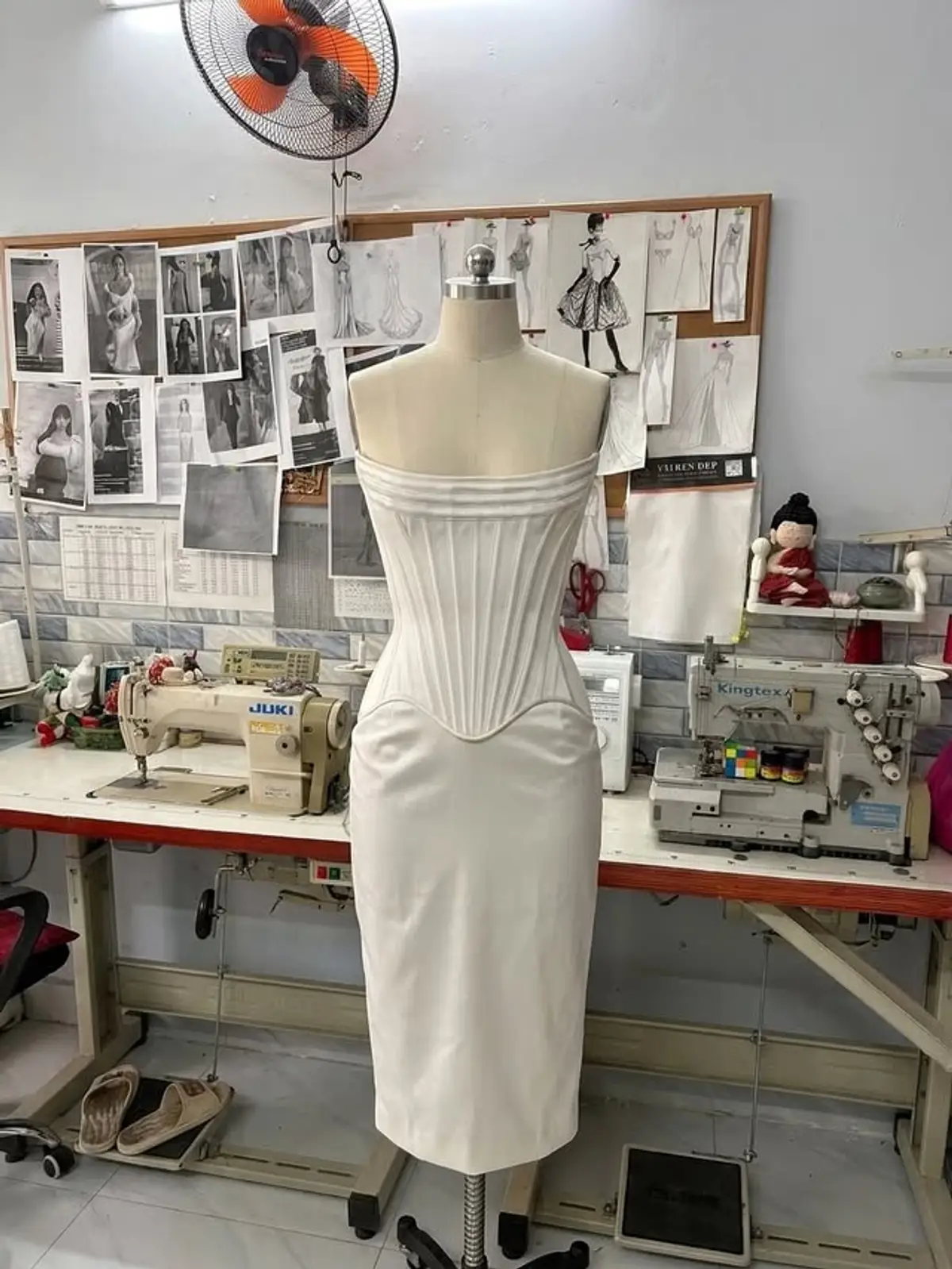
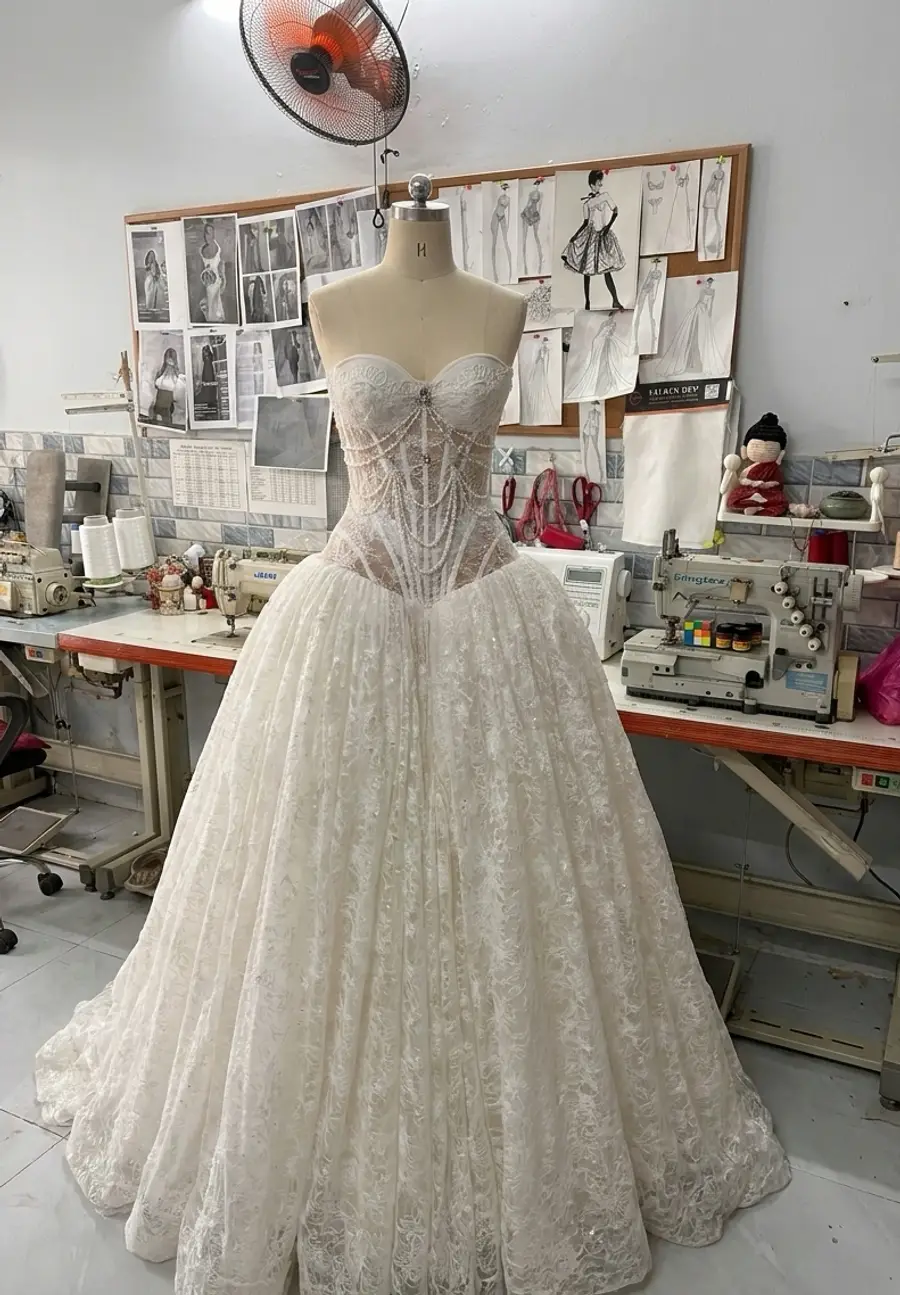
VI Dressmakers atelier tools and fabric workspace used for custom wedding dress fabric review

Vi's note

Written by Vi Updated

Custom wedding dresses at VI Dressmakers are quoted after the fabric direction is reviewed — not before. Fabric is usually the largest single cost item in a custom gown, and it affects structure, silhouette, movement, coverage, and how the dress looks in real photos.

This guide explains what I check before confirming a direction, and what brides should know before they send a brief.

Fabric direction is confirmed before deposit because fabric affects structure, quote, and final photos.

Why fabric drives the quote

Why fabric is the first thing I review

Fabric is not a finishing detail. It is a structural decision that affects everything else: how the bodice is built, how the skirt moves, how the dress ships, and how the gown photographs on the wedding day.

It is also usually the largest single line item in a custom gown order. A lace overlay gown costs significantly more to produce than a plain satin or crepe column, not because of style preference, but because of material cost, lining complexity, and the time required to cut and place the fabric correctly.

  • Fabric direction

    What the bride's references suggest and whether I can source it.

  • Construction implications

    What the fabric needs to perform correctly: lining, boning, underlining, or other support.

  • Cost range

    How the fabric choice affects the overall quote.

  • Availability

    Whether I can source the fabric before production begins.

If a fabric from a reference image is not available, I confirm an alternative before production continues. The alternative and its impact on the quote are confirmed in writing before deposit.

Fabric is confirmed before deposit. A quote issued without confirmed fabric direction is a range, not a final number.

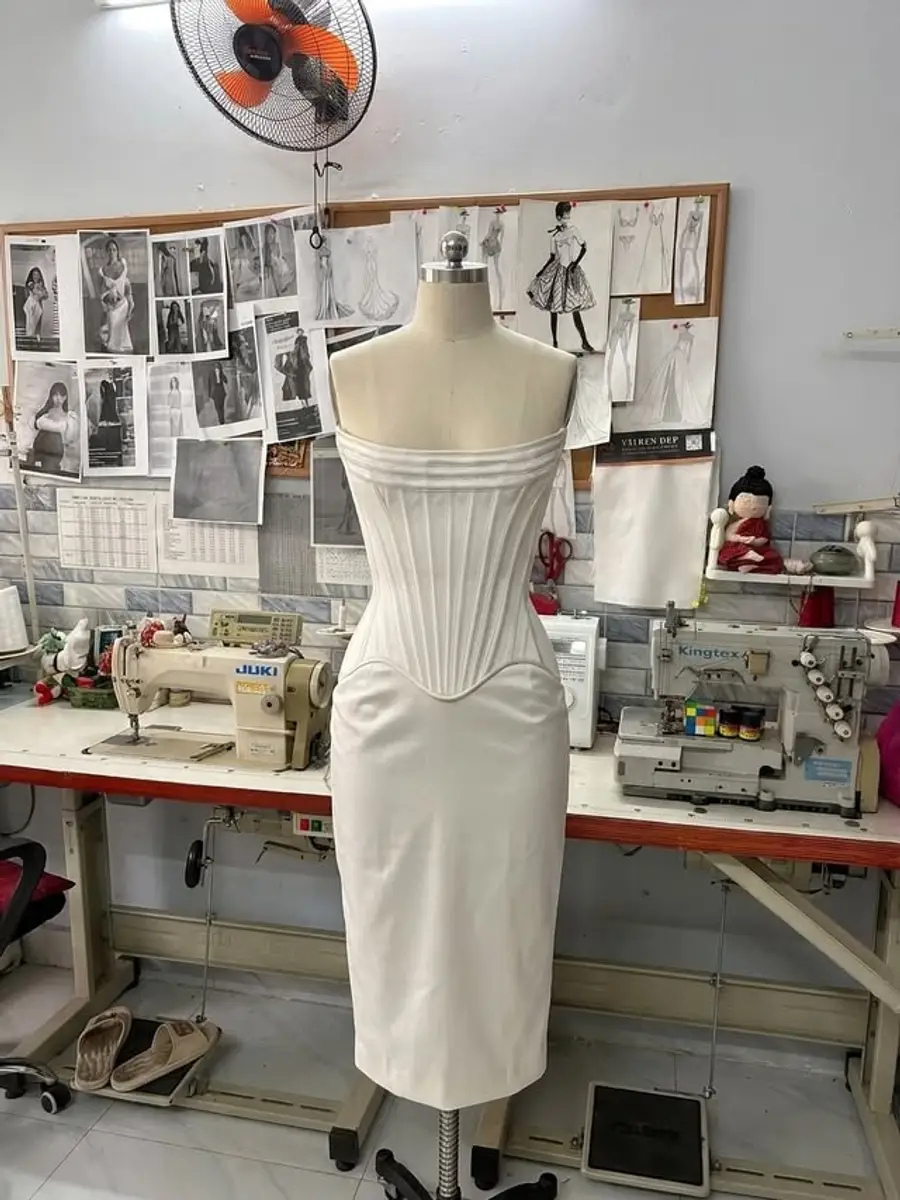
VI Dressmakers fabric workspace used for the custom wedding dress fabric guide and quote review
A fabric decision affects structure, pattern work, production time, and the final quote.

Fabric categories

The fabrics I work with

These are the main fabric categories I use at VI Dressmakers. Each behaves differently on the stand, in real photos, and during shipping.

Mikado silk

Mikado is a structured fabric with a subtle sheen. It holds shape well, presses cleanly, and photographs with a smooth, polished finish. It does not drape softly — it holds its line. This makes it a strong choice when the silhouette depends on structure: a clean A-line, a fitted column, a full skirt that needs to hold volume, or a draped bodice that should keep its fold.

Mikado is heavier than satin, which means it also packs and ships differently. A full mikado skirt adds weight and volume to the shipping box.

Su’s Princess Pickup and Krystal’s Draped Mikado both used mikado silk — for different silhouettes, but both relied on the fabric’s structure to hold the intended shape.

Premium lace

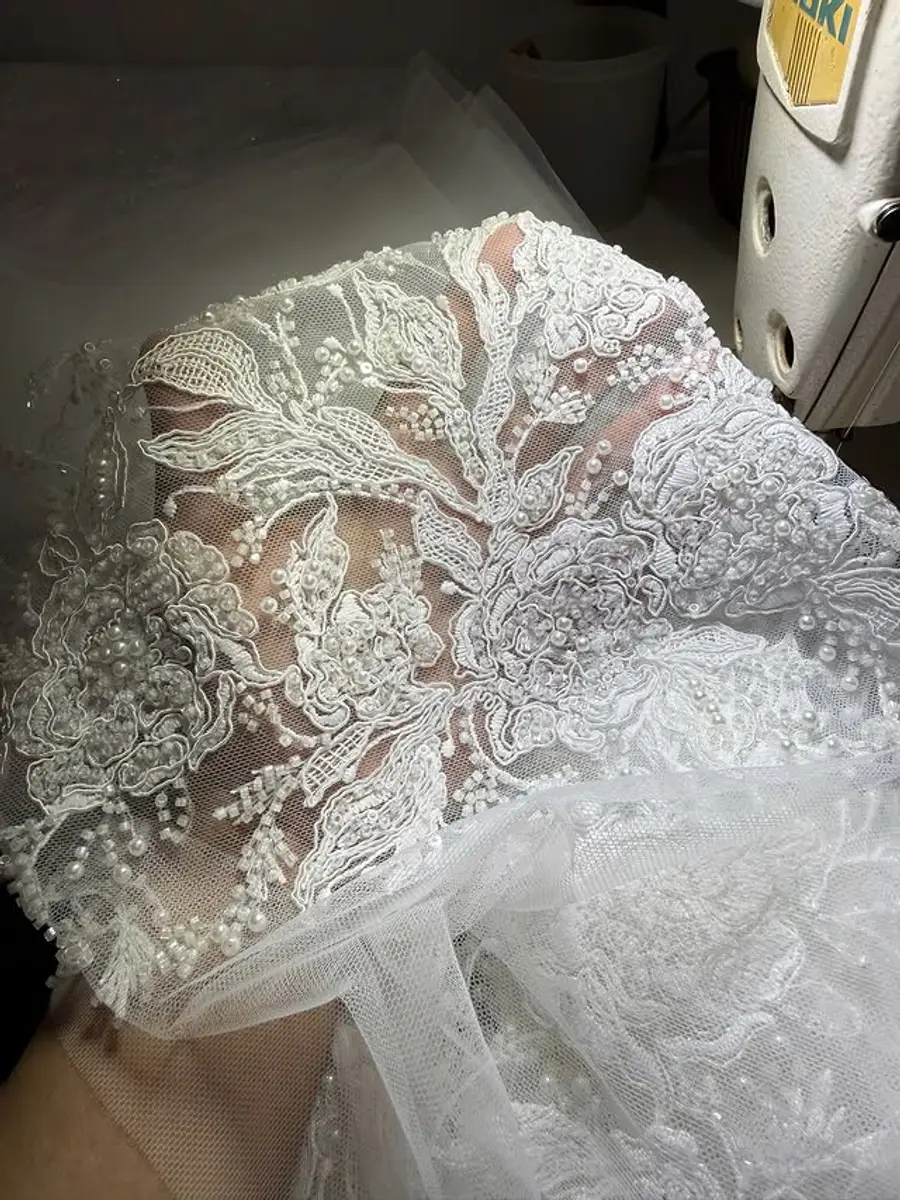
Lace is not one fabric — it is a category with significant variation in weight, pattern scale, elasticity, and coverage. The lace I source is reviewed for pattern scale, stretch, coverage, and how it behaves against the underlining or lining.

Lace orders require more planning than plain fabric orders. I review:

  • Lining color

    Nude, ivory, or white underlining changes how lace reads in photographs.

  • Coverage

    Whether the lace provides coverage on its own or needs a modesty layer.

  • Pattern placement

    Especially at the neckline, hem, and back closure.

  • Ceremony needs

    Some venues or ceremonies have coverage requirements.

Lace is also more sensitive to pinning, pressing, and handling than plain fabric. Final QC review on a lace gown includes checking pattern placement, hem finish, and coverage from multiple angles before dispatch.

Kathleen, Simone, Katy, and Amelia all ordered premium lace gowns — each with different coverage requirements, underlining decisions, and silhouettes.

Satin and crepe

Satin and crepe are the two most versatile plain fabrics I work with.

Satin has a smooth surface with a visible sheen. It photographs brightly and reads as classic bridal. It shows every seam, wrinkle, and surface mark, which means construction needs to be clean and pressing needs to be careful. Satin can shift during cutting if not handled correctly.

Crepe is matte and has more texture than satin. It drapes more softly, photographs with a subdued, modern finish, and is more forgiving in construction than satin. It is a strong choice for minimalist or contemporary directions.

Both fabrics are available in a range of weights. A heavier satin holds structure better in a fitted bodice. A lighter crepe drapes more freely in a skirt or cowl.

Mei Lin’s ivory satin corset gown used satin for its clean finish and classic look.

Taffeta and chiffon

Taffeta is crisp and holds volume without weight. It is a common choice for full princess or ballgown skirts when the bride wants a structured silhouette without the heaviness of mikado. Taffeta has a slight rustle when moving. It can crease under pressure, which affects how the dress packs for shipping.

Chiffon is lightweight, sheer, and flows easily. It drapes over underlining or a fitted slip. Chiffon is often used for overlays, sleeves, or skirt layers rather than as a standalone fabric. Because it is sheer, lining and underlining decisions affect coverage significantly.

Charmeuse sits between chiffon and satin — it has a soft satin surface on one side and a matte finish on the other. It drapes with weight and is used in bias-cut or draped designs where the fabric needs to follow the body.

Mina’s taffeta ballgown used premium wrinkle taffeta for a full princess skirt with a clean, structured finish.

Premium bridal lace and pearl embroidery reviewed for custom wedding dress fabric direction
Lace, satin, crepe, taffeta, chiffon, and mikado all change the way a dress is built.

Photos vs real life

What inspiration photos cannot tell you

Most brides build their references from Instagram, Pinterest, or editorial shoots. These images are useful for direction — silhouette, structure, neckline, coverage. They are less reliable for fabric.

Editorial and campaign photography is styled with heavy lighting, retouching, and environment control. The fabric in those images may look smoother, brighter, or more textured than it appears in real life or in natural venue lighting.

  • Lace coverage

    Editorial lace can photograph as opaque. Under natural light or flash, the same lace may read as more sheer. I check this before confirming the lining plan.

  • Satin sheen

    Satin picks up ambient light and can appear very different indoors versus outdoors, in daylight versus flash. High-sheen satin in an editorial can look creamy ivory in a church.

  • Fabric weight and drape

    A heavy silk organza skirt in an editorial stands differently from a taffeta or tulle version. If the movement in a reference matters, I confirm whether the fabric I am sourcing will behave similarly.

  • Color

    Ivory, champagne, off-white, and blush read very differently under different lights. If color accuracy matters, I confirm the shade against a fabric proof before cutting.

When fabric needs to be confirmed before production continues, I send a fabric proof: a photograph of the actual fabric sample in natural light. This is not automatic for every order, but I recommend it when the shade, coverage, or texture of a reference fabric is critical to the bride’s decision.

Fabric proof is available on request and recommended when shade or texture confirmation matters before cutting.

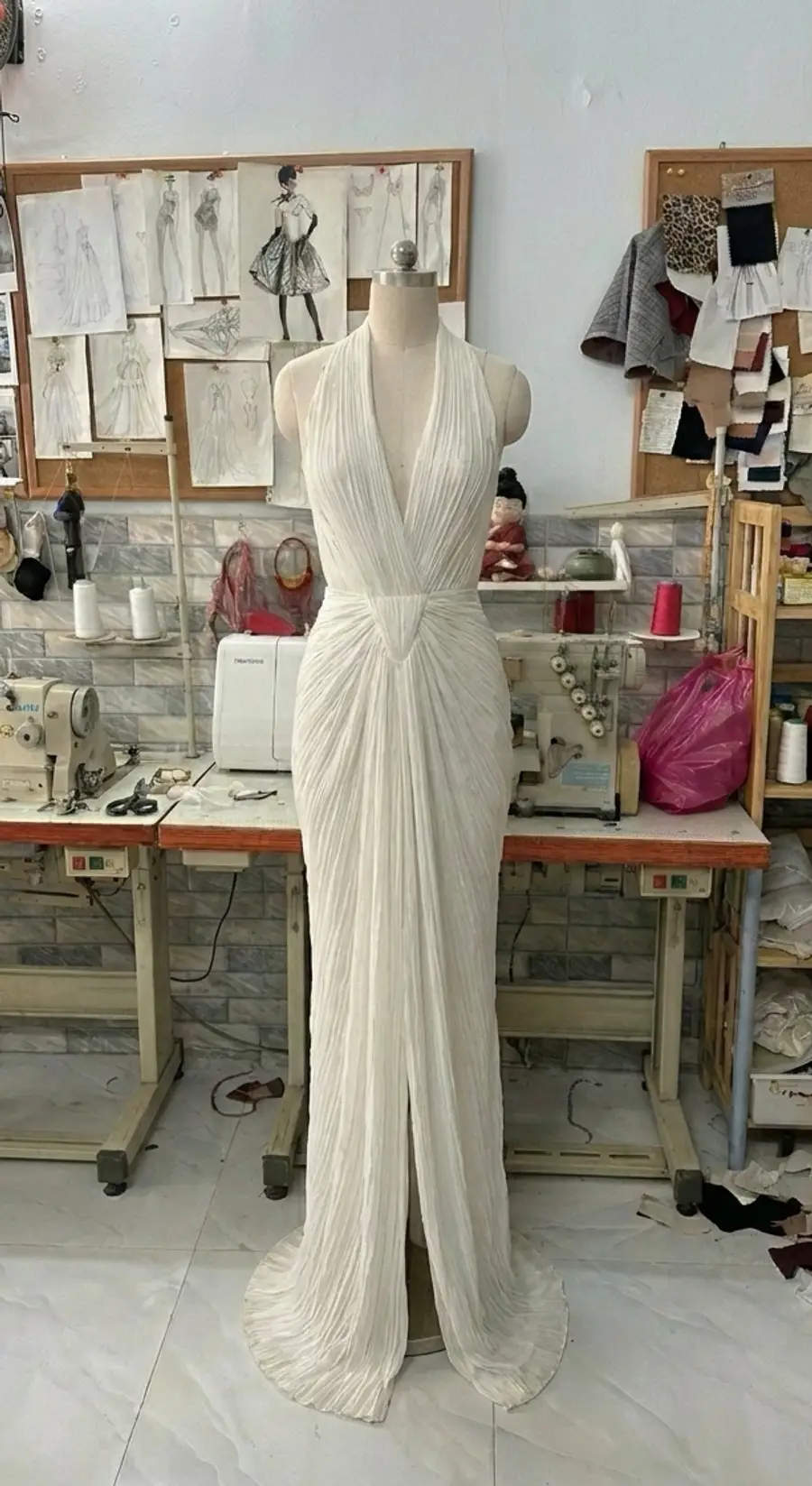
Draped bridal fabric for a custom wedding dress fabric guide showing movement and light
Inspiration photos help with direction, but fabric behavior still needs review before cutting.

Availability

What happens when a fabric is not available

I do not confirm a production deposit before confirming fabric availability.

If a fabric from a reference image is not in stock or cannot be sourced in the required shade, I find the closest available alternative before production continues. I confirm the alternative with the bride — what it is, how it differs from the reference, and whether it changes the quote — before any deposit is requested.

An order does not move into production with an unconfirmed fabric substitution.

  • Fabric name and description

    What the fabric is and how it will be used in the gown.

  • Shade or color reference

    The color direction confirmed before production moves forward.

  • Differences from the reference

    Any visible change from the inspiration image is explained before deposit.

  • Quote impact

    Whether the substitution affects the quote or quote range.

  • Fabric cut

    How the fabric will be cut and what availability timeline applies.

If the fabric is not confirmed, the production deposit is not requested.

Premium bridal lace and embellishment sample reviewed before custom wedding dress fabric substitution
An order does not move into production with an unconfirmed fabric substitution.

Your brief

What helps Vi review fabric before quoting

You do not need to know the fabric name to send a useful brief. I review references and confirm direction from there.

  • References with multiple angles

    Fabric reads differently from the front, the back, and in movement. Multiple angles help me confirm whether the effect requires a specific fabric type or can be achieved with alternatives.

  • What you care about most

    Is it the coverage, the sheen, the weight, or the way the fabric moves? Knowing your priority helps me recommend the right option when alternatives are needed.

  • Wedding venue or setting

    Outdoor afternoon light shows fabric differently from an evening indoor venue. Coverage needs may also vary.

  • Budget direction

    Plain satin or crepe is significantly less expensive than beaded lace or specialty silk. Knowing your direction helps me review whether the reference fabric is realistic for the budget before quoting.

What I do not need: the exact fabric name, a fabric swatch, or a specific brand or designer fabric reference. I confirm fabric direction and source from the atelier.

A clear reference with your priority noted is enough to start the fabric review.

Finished premium wrinkle taffeta ballgown showing custom wedding dress fabric volume and structure
A clear reference with your priority noted is enough to start the fabric review.

Start with proof

Send your references and fabric direction.

Share your inspiration images, wedding date, delivery country, and any notes on coverage, texture, or movement. Vi reviews the fabric direction before confirming a quote.